

By Mark Jacobs
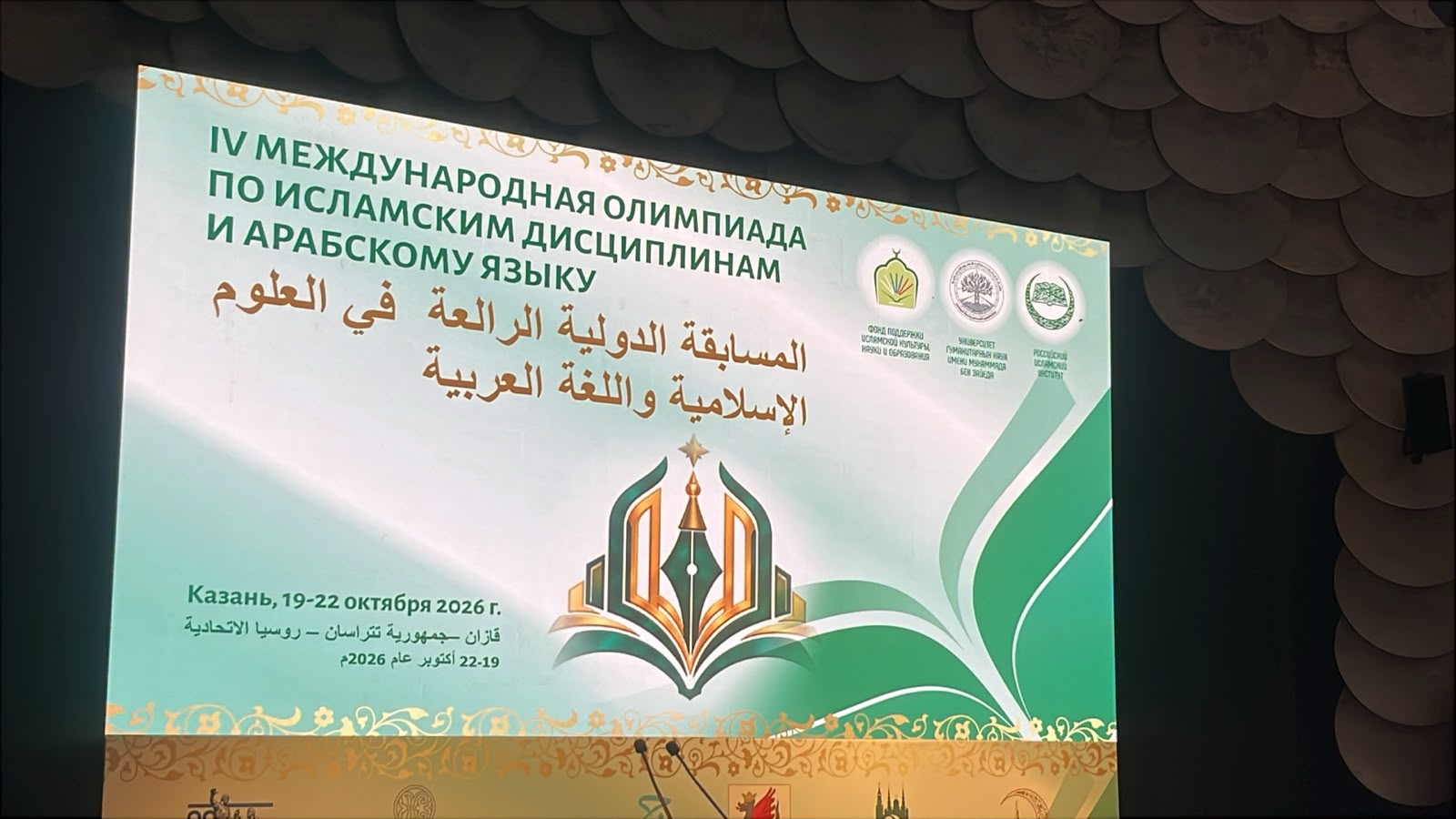
Kazan hosted the International Student Forum “Dialogue of Cultures: Russia – Islamic World”, bringing together students, young researchers and activists from 20 countries. The forum was co-organised by the Russian Islamic Institute and Mohammed bin Zayed University for Humanities (UAE), with the support of the Foundation for the Support of Islamic Culture, Science and Education and the Strategic Vision Group “Russia – Islamic World”.
A key part of the programme was the 4th International Olympiad in Islamic Studies and the Arabic Language, which brought together students from Russian Islamic higher education institutions and participants from 15 foreign countries. Teams from Serbia, Bosnia and Herzegovina, and South Africa took part for the first time. The winners were honoured on the 21st of October at the Galiaskar Kamal Theatre.
The forum programme featured a plenary discussion entitled “Shared values as the foundation for dialogue”, a workshop titled “Dialogue of cultures in my country”, and round tables on youth cooperation, academic mobility, and digital communications.
Our Team
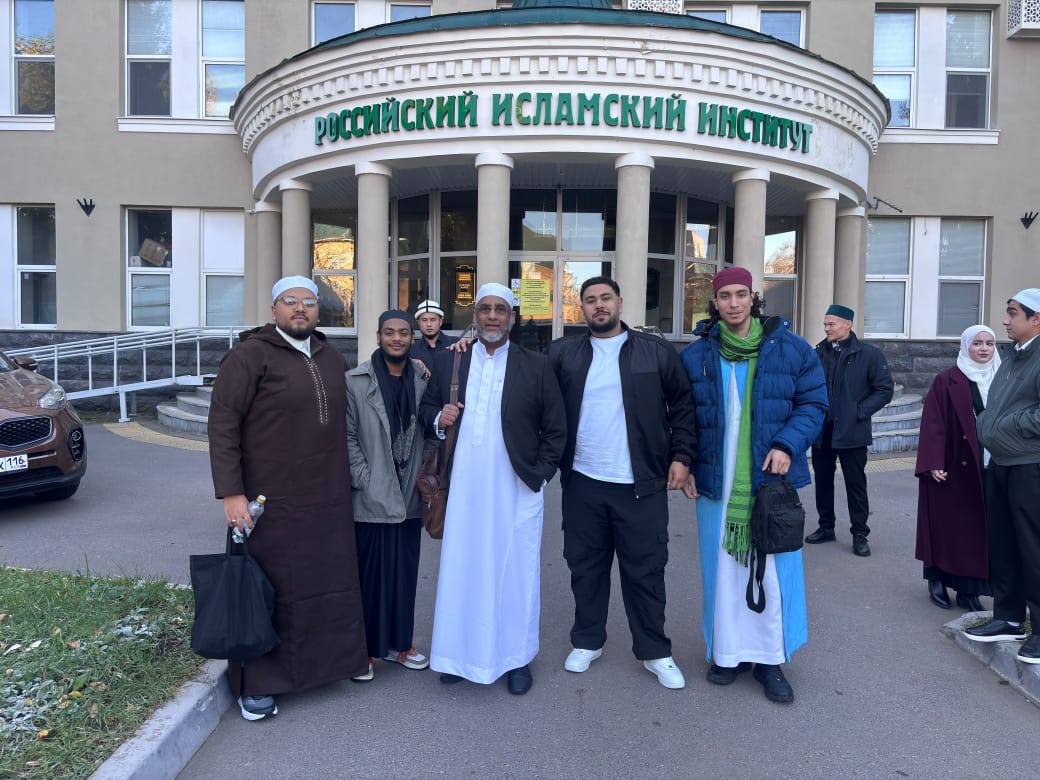
The South African team comprised four nominated undergraduate students (under 25 years old) and an accompanying coordinator. I, Mark Jacobs, represented International Peace College South Africa (IPSA) in the category of Shāfi’ī Fiqh and Usūl al-Fiqh, Suhaib Saidi represented the University of the Western Cape (UWC) in the category of Arabic Language, Muhammad Ridhaa Hendricks represented Madina Institute South Africa in the category of Islamic Theology and Religion, and Dayaan Loubscher also represented Madina Institute South Africa in the category of Ḥanafī Fiqh and Usūl al-Fiqh. The team’s coordinator was Shaykh Nabiel Majiet, a Senior Lecturer at Madina Institute South Africa.
I am extremely grateful for being afforded the companionship of my teammates for the few days that we travelled together. Despite some of us not knowing each other, all of us got along very well and built a long-lasting bond. We have different backgrounds and customs; however, these were outshone by the Islamic teachings of brotherhood and mutual respect.
Religion, when embodied for the sake of love, mercy and the reverence of God, is truly a beautiful thing. Excellent character and beautiful manners certainly leave a lasting impact on the heart – across time zones and continents.
The South African team was praised by many of the international students for the teammates’ warmth, good manners and sincerity in building friendships – some traits that I would consider hallmarks of the Cape Town community.
The Competition
The competition comprised of a 4-category Olympiad, namely Shāfi’ī Fiqh and Usūl al-Fiqh (Islamic Law/Jurisprudence), Ḥanafī Fiqh and Usūl al-Fiqh, Islamic Theology and Religion, and Arabic Language. The Olympiad was conducted entirely in Arabic with each test containing 200-300 questions to be answered in 120 minutes.
As an undergraduate student majoring in Arabic and having been given 1 month notice about the competition, I found it quite challenging. It was a great learning experience for all of us and certainly taught us where the international standard of Islamic and Arabic scholarship lies.
Discussions & Prize Giving. The “Dialogue of Cultures: Russia – Islamic World”; plenary discussion, “Shared Values as the Basis for Dialogue”; exhibition titled “A Taste of Unity: Sweets of the Peoples of the Islamic World”; and Olympiad prize giving took place at the Galiaskar Kamal Theatre – One of the most prestigious venues in Kazan.
Discussion & Prize Giving
Participants came from countries ranging from the United Arab Emirates and Qatar to Indonesia and South Africa.
Tatarstan Mufti Kamil Samigullin highlighted Russia’s Islamic theological heritage, citing scholars including Shigabuddin Marjani, Galimjan Barudi, Murad Ramzi and Abdurashid Ibragimov.
He said Kazan had historically been a centre of religious learning alongside cities such as Bukhara, Samarkand, Damascus, Baghdad and Cairo.
Citing the teachings of Hasan al-Basri, an early Muslim scholar, the mufti warned against acting without knowledge and obstructing others from learning. He said there was hope for the revival of Islamic scholarship and the emergence of new scholars as long as such obstacles did not become decisive.
In a world of segregation and infighting, these discussions were a breath of fresh air, encouraging us to put our differences aside and focus on our commonalities and foundational religious grounding.
With an abundance of online propaganda spreading about false Islamic principles and ethics, Muslims are encouraged to maintain cohesion and observe the core commandments of the religion, avoiding falsely representing the religion, the Holy Qur’an and the Prophet Muhammad (PBUH) with extremism or carelessness.
First place went to representatives of universities from Russia and Uzbekistan:
- Muhammad-Solyakh Dzhankhotov – Theology and Religion
- Ali Meyriyev – Arabic Language
- Abdulaziz Odiljonov – Islamic Law (Ḥanafī School of Jurisprudence)
- Makhmud Yushayev – Islamic Law (Shāfi‘ī School of Jurisprudence).
Muhammad Ridhaa Hendricks of Madina Institute South Africa brought home a prize. We are extremely proud of him and wish him well for his future in Islamic scholarship. It was a pleasure travelling with him. He is a hardworking, well-mannered, and talented young man that will go far in life, in-shā-Allah (God-willing).
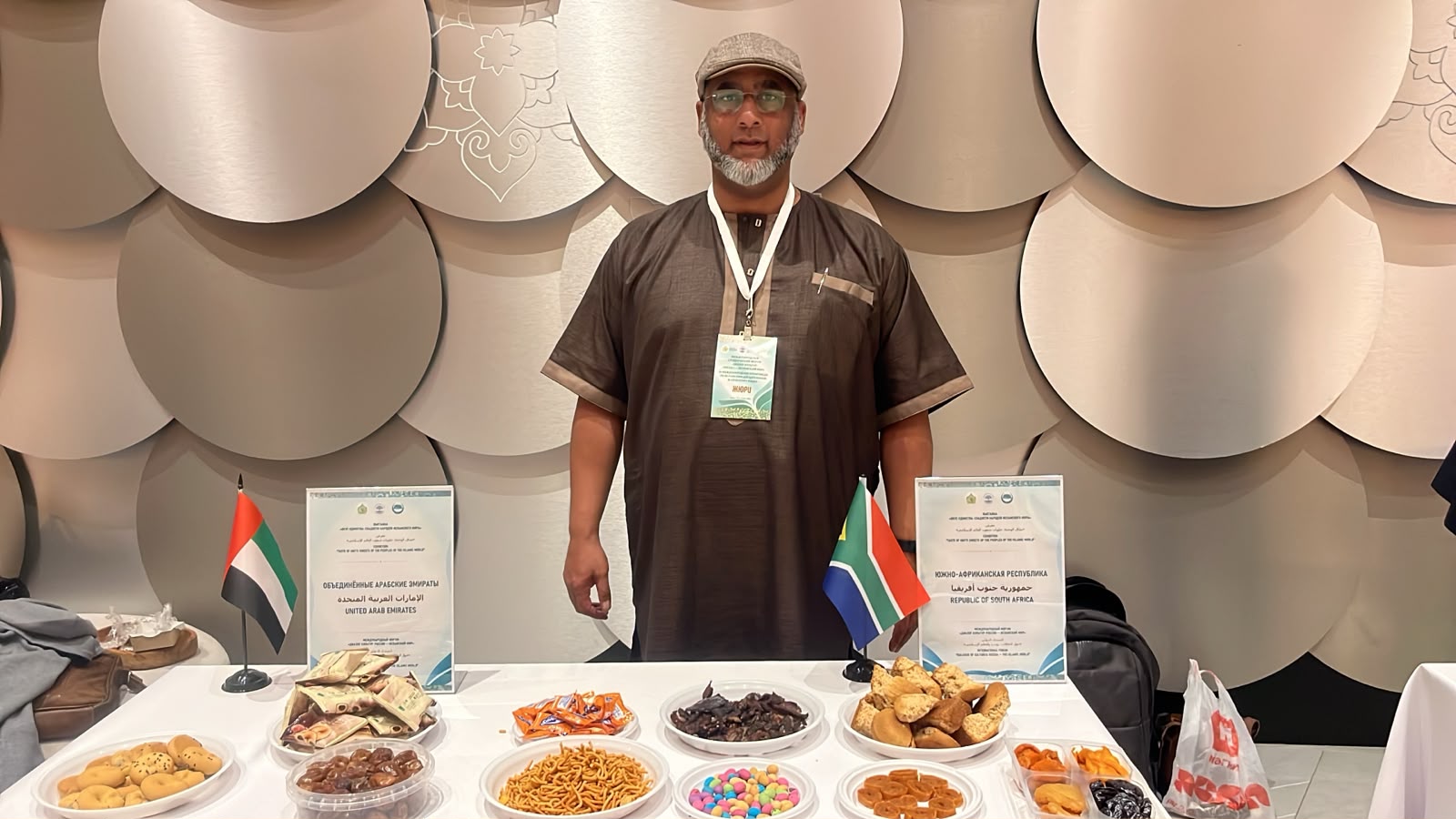
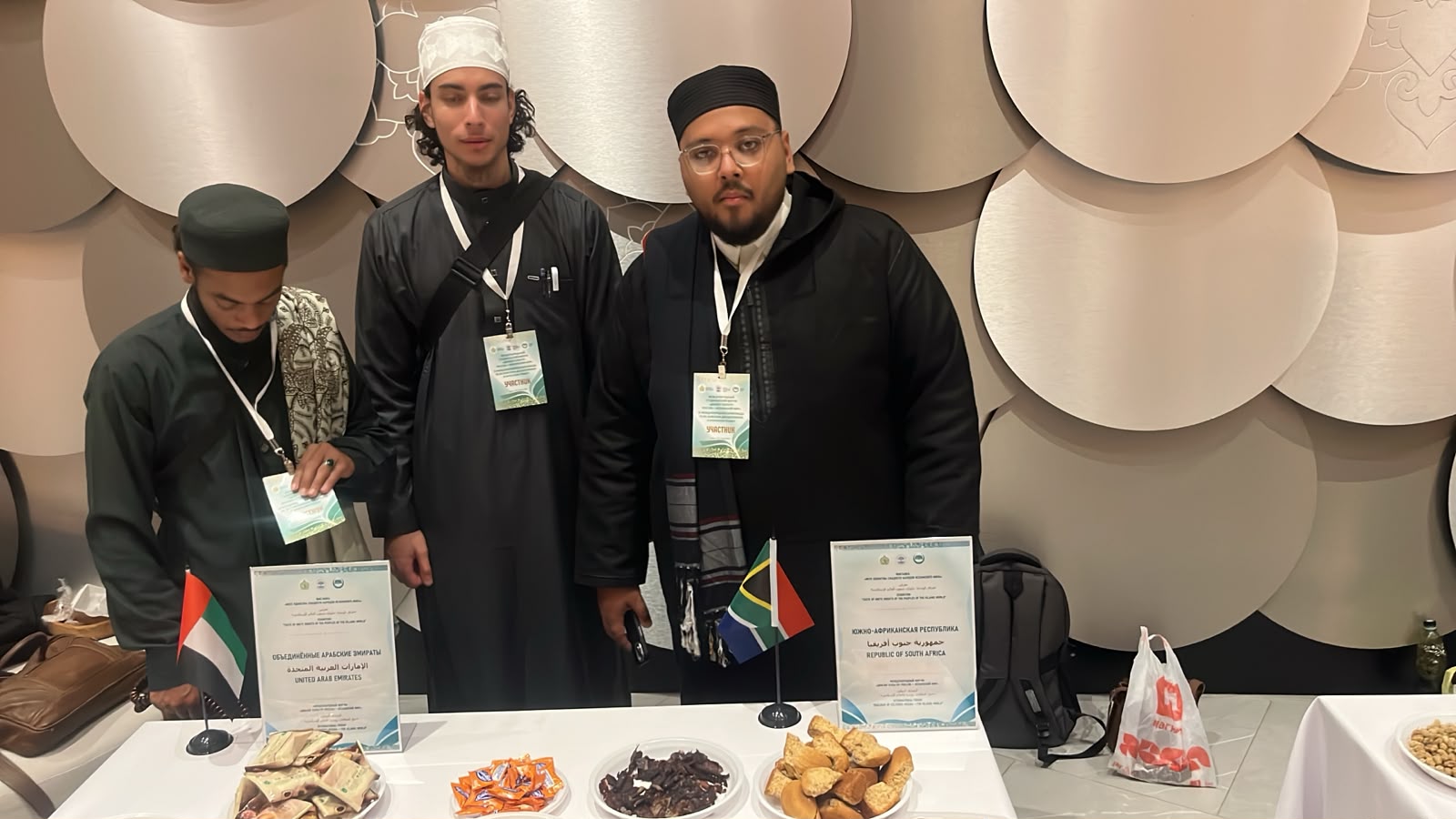
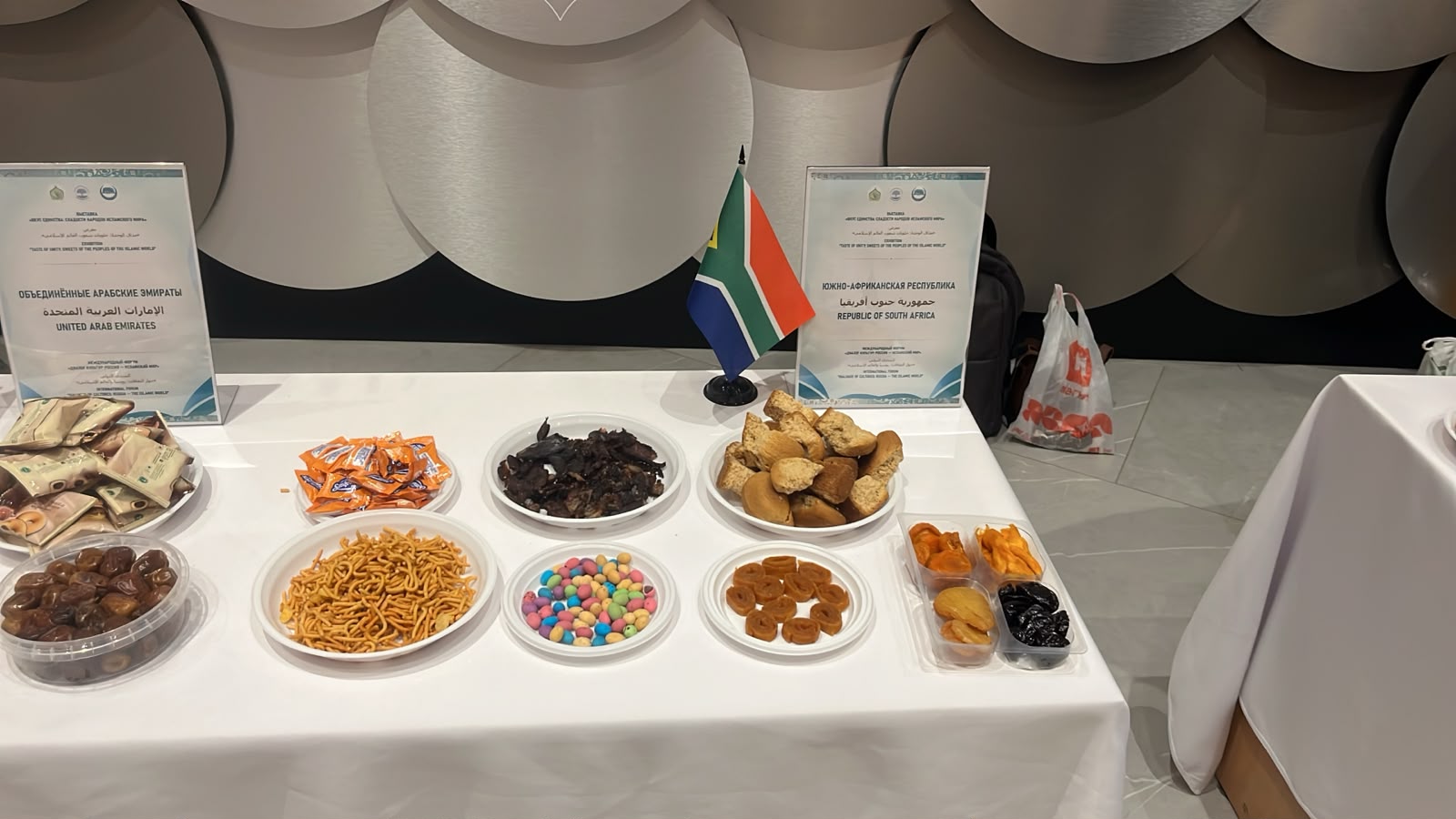
The exhibition titled “A Taste of Unity: Sweets of the Peoples of the Islamic World” was prepared beautifully with a display of savouries and sweets from each country. South Africa’s table had biltong and other local treats that were thoroughly enjoyed by all countries.
TV Interviews
I was interviewed by the state (Tatarstan) TV on Tuesday, and on Wednesday, at the Galiaskar Kamal Theatre, it was requested that I be interviewed for the national TV (Russia).
Kazan, Tatarstan – Russia
Kazan is the capital and largest city of Tatarstan, Russia. The city lies at the confluence of the Volga and the Kazanka rivers, covering an area of 425.3 square kilometres, with a population of over 1.3 million residents, and up to nearly 2 million residents in the greater metropolitan area.
Kazan has a blend of Tatar and Russian cultures; the population is nearly evenly split between Tatars and Russians. Tatar (a Turkic language) and Russian are official languages. The city is known as a meeting point of Islam and Christianity, featuring a long-standing history of peaceful coexistence between Tatar Muslims and Russian Orthodox Christians.
Some key landmarks & attractions that we were able to visit were: the Kazan Kremlin – A UNESCO World Heritage Site featuring a white-stone fortress, the Kul Sharif Mosque – A prominent, blue-domed mosque located inside the Kremlin grounds, Bauman Street – a famous pedestrian shopping and walking thoroughfare and Palace Square – A building in the historic centre of Kazan, housing the Ministry of Agriculture and Food of the Republic of Tatarstan.
The journey to Kazan was long, requiring a lot of patience. The team took a 9-hour long flight from Cape Town to Dubai, endured a 10-hour long layover, and then took a 6-hour long flight, finally arriving in the 0°C moonlit city of Kazan.
Weather
Going from 20°C in Cape Town to 39°C in Dubai to 0°C in Kazan was quite extreme. Having never experienced such low temperatures before, my body required a drastic adjustment.
Kazan, Russia has a humid continental climate featuring long, cold, snowy winters and warm summers. As much as I would have liked to see some snow, I do think that we are fortunate to have only felt the potential of Kazan’s coldness in its Autumn season, allowing us to still go out and sightsee until late into the night.
The People
Upon arrival, we were privileged to have been welcomed by a kind face – a friendly young man named Ismaīl, who would soon come to be one of our closest friends, sharing farewell tears with us at the Kazan airport departure gate. Every person, young and old, that I met in Kazan was not only warm and hospitable, but also extremely respectful and well-mannered.
If there was one reason for me to visit Kazan again it would be the kind-hearted, selfless people who did not only make us feel at home, but honoured us as guests, spending their wealth and time on us without hesitation. Some special young men worth naming are: Ismaīl (our escort), Azamat, Almāz and Samīr – Gentlemen of around 20 years old, who went out of their way to make our trip memorable.
Something especially interesting that I came to know about was the value of time and punctuality amongst the Tatar people. I was told that 5 – 20 minutes early is the common expectation and that impunctuality is distastefully frowned upon.
Delicious Cuisine
I thoroughly enjoyed every meal that we were presented with. I was pleasantly surprised to see that every meal comprised of 3-5 courses – I think I gained a few kilograms!
There were no notable spices in any of the dishes, however each one was flavoured with broth and vegetables – hearty and delicious. From the starter soups to the main stews and desert pastries, I could not help but leave my plate or bowl squeaky clean.
A shock to us South Africans was that horse meat is a Kazan delicacy. We certainly frowned upon hearing about it, but upon some of us trying it, we enjoyed it, despite it tasting very different and wild… Let me rather not mention the horse milk… Certainly an acquired taste.
Religious Coexistence
Kazan is a unique multi-ethnic and multi-faith city where Sunni Islam and Eastern Orthodox Christianity are the two primary religions.
Islam (Sunnī, Ḥanafī): Followed by about 52.5% of the population, primarily ethnic Tatars. Kazan is often referred to as the Islamic capital of Russia.
Eastern Orthodox Christianity: Followed by about 43.0% of the population, primarily ethnic Russians.
The religion of Islam is very prevalent in Kazan. I often saw tasbīḥs (Muslim prayer rosaries) hanging in busses, bidet facilities in bathrooms and an abundance of mosques around the city.
Many of the senior Islamic studies students are fluent in Arabic, as they spend the first year of their degree primarily focussing on proficiency in the language before delving into the subjects of theology. The common language of communication during the event was Arabic. Being able to speak the language was certainly more useful than I expected it to be.
Transport
The different forms of transport that I saw in the city were: cars, cabs, busses, trams, subway trains and electric scooters.
Most people walk and use public transport. The city of Kazan is known for its safety (alongside its cleanliness), and I often saw young children walking around alone late at night. The subways are beautifully decorated with traditional lamps and mosaic artwork.
Architecture
Kazan architecture is a unique blend of Tatar (Islamic) and Russian (Orthodox Christian) styles, creating a bridge between Eastern and Western culture es. It has a vibrant blend of styles, where baroque, constructivism, and classicism exist harmoniously within just a three-kilometre radius.
I often found myself to be awestruck at the beautiful buildings that looked like they were straight out of a fairytale.
Symbols
Kazan is rich in Turkic and Russian folklore, featuring iconic symbols and legends rooted in its multicultural history.
The Zilant is a legendary dragon-like creature with red wings, scaly dark skin, and a bird-like body. It is the official heraldic symbol and coat of arms of Kazan, appearing on city monuments and flags. Legends describe it either as a former ruler/guardian of local snake populations and hidden khan treasures or as a benevolent/feared mythical beast.
In Kazan and Tatar folklore, the famous “tickling monster” is a forest spirit known as the Shurale (Şüräle). Shurale encounters lonely travellers or woodcutters who have lost their way, he traps them. Instead of using teeth or weapons, he uses his long fingers to mercilessly tickle his victims to death.
The Clothing
From my Cape Town background, I was surprised to see that, despite Kazan being predominantly Muslim, the only men in the streets wearing thobes (long Muslim garbs) were ourselves. I often forget that these garbs that are so commonly worn by Cape Town Muslims, despite being hallmarks of Islam and Islamic scholarship, are rooted in Arab tradition.
Ones clothing is certainly not a reflection of their piety or religious knowledge (beyond what has been made compulsory in Islam). We came to know extremely learned and religiously observant men who wear shirts and pants as their daily attire.
Muslim women were prominent – wearing their traditional colourful headscarves and dresses – adorned with modesty and shyness.
Other Competitors
Every competitor that we met had beautiful character and good hearts. I have not met more respectful people, nor people that sincerely prefer others over themselves. We exchanged gifts and farewells. One had to be careful as to not compliment a jacket, hat or perfume, as it may have just been taken off without hesitation, gifted and seen itself back home in your luggage.
Something noteworthy about the young men from the region was their masculinity, self-awareness, and conscientiousness – despite (only) being about 18 years old.
A Sincere Thank You
I am eternally grateful to God, and all who made this trip possible for me. It was truly a blessed experience, filled with memories and friendships that will last a lifetime.
A big thank you to the organisers from the Russian Islamic Institute and Mohammed bin Zayed University for Humanities (UAE), the Foundation for the Support of Islamic Culture, Science and Education and the Strategic Vision Group “Russia – Islamic world,” to International Knowledge Foundation South Africa, to Dr Dawood Terblanche, the CEO of IPSA and our colleges/universities who nominated us, and to our team’s coordinator, Shaykh Nabiel Majiet, for making this possible.
A special thank you to my lecturers at IPSA, my Arabic teacher, Dr Belqes Saif Al-Sowaidi and my murshid and ustādh, Shaykh Abdurahman Dollie who selflessly dedicated many hours to private reading sessions over the past 6 weeks to assist me with preparation for the competition. As well as the many people who opened their hands in generosity. Finally, the biggest thank you goes to my parents, for whom I cannot use words to express my gratitude.
I would love to visit Kazan again, hopefully in the near future.
Mark Jacobs
Mark Jacobs is a 22-year-old student from Cape Town, South Africa – In his final year of studying a BA degree in Islamic Studies and Arabic at International Peace College South Africa. He is a long-term student of Hidāya Institute and a lecturer at Irshad Academy. He is also an intern Imam.
Since deciding to observe the religion of Islam about 5 years ago, he has immersed himself in Islamic scholarship. He currently lives in his family home in Pinelands, Cape Town with his father and mother.

